

The Bhagavadgita,The Sanskrit Epics and Their Impact: Dubrovnik International Conference on the Sanskrit Epics and Puranas DICSEP Publications, Vol. 9
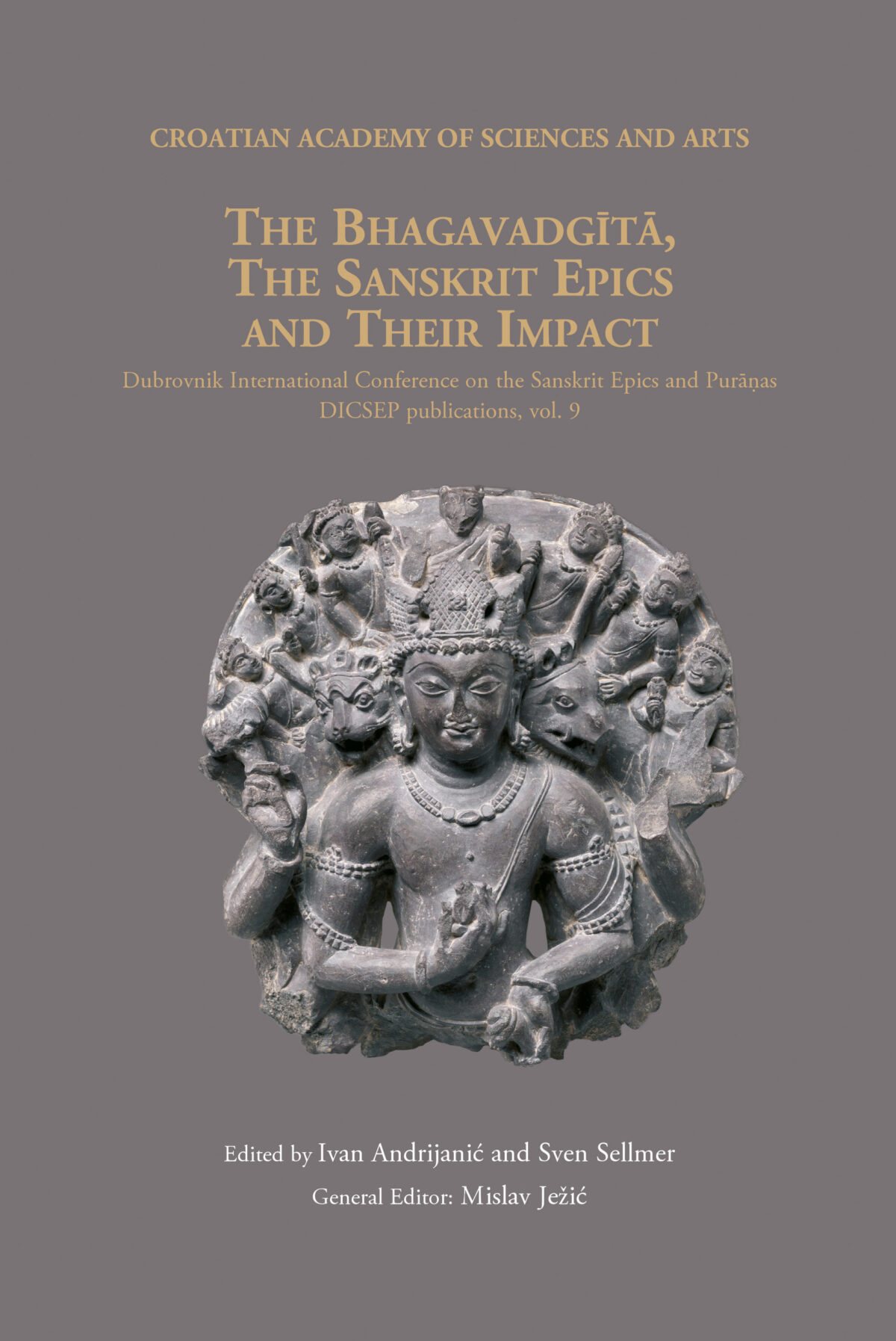
About the Book
In this volume the two papers on the Bhagavadgita illustrate two traditional approaches to this text. One approach sees the poem as a unitary text, created at once, and interprets its formulations as mutually harmonized inside a single system, while the other approach understands the Bhagavadgita as a multi-layered dialogue with the changing world and the ideas emerging in it, and tries to logically reconstruct this historical dialogue. The next two papers are concerned, one with the corresponding motifs and themes in different epic stories, predominantly in the Mahabharata, and with the question of a possible common matrix of comparable stories, and the other with the literary merits of an epic, in this case the Ramayana, versus the ethical questions which are raised by its plot. The last two papers analyse different impacts of the Sanskrit epics in later times, one their impact on the stylistics of the early Kavya in the case of Aśvaghoşa, and the other the impact of the cultural, social and religious aspects of the Ramayana on the life and activities of their transmitters and promoters and of the society in which they lived in a period of one to two millenia after the period of the composition of the epics.
- Author: Edited By: Ivan Andrijanic & Sven Sellmer, General Editor: Mislav Jezic
- Publisher: Dev Publishers
- Year: 2026
- Dimension: 23 x 15 x 2 cm
- No. of Pages: 208
- ISBN: 9789359440712
- Binding: Hardcover
- Price: ₹ 1995
Table of Contents
Contributors:
Johannes Bronkhorst
Giulia Buriola Meneghin
Diletta Falqui
Mislav Ježić
Krešimir Krnic
Péter Száler